2026 Catering Industry Trends: What Smart Operators Are Doing Differently This Year
The catering market is getting bigger… and somehow, a lot of operators feel smaller inside it.
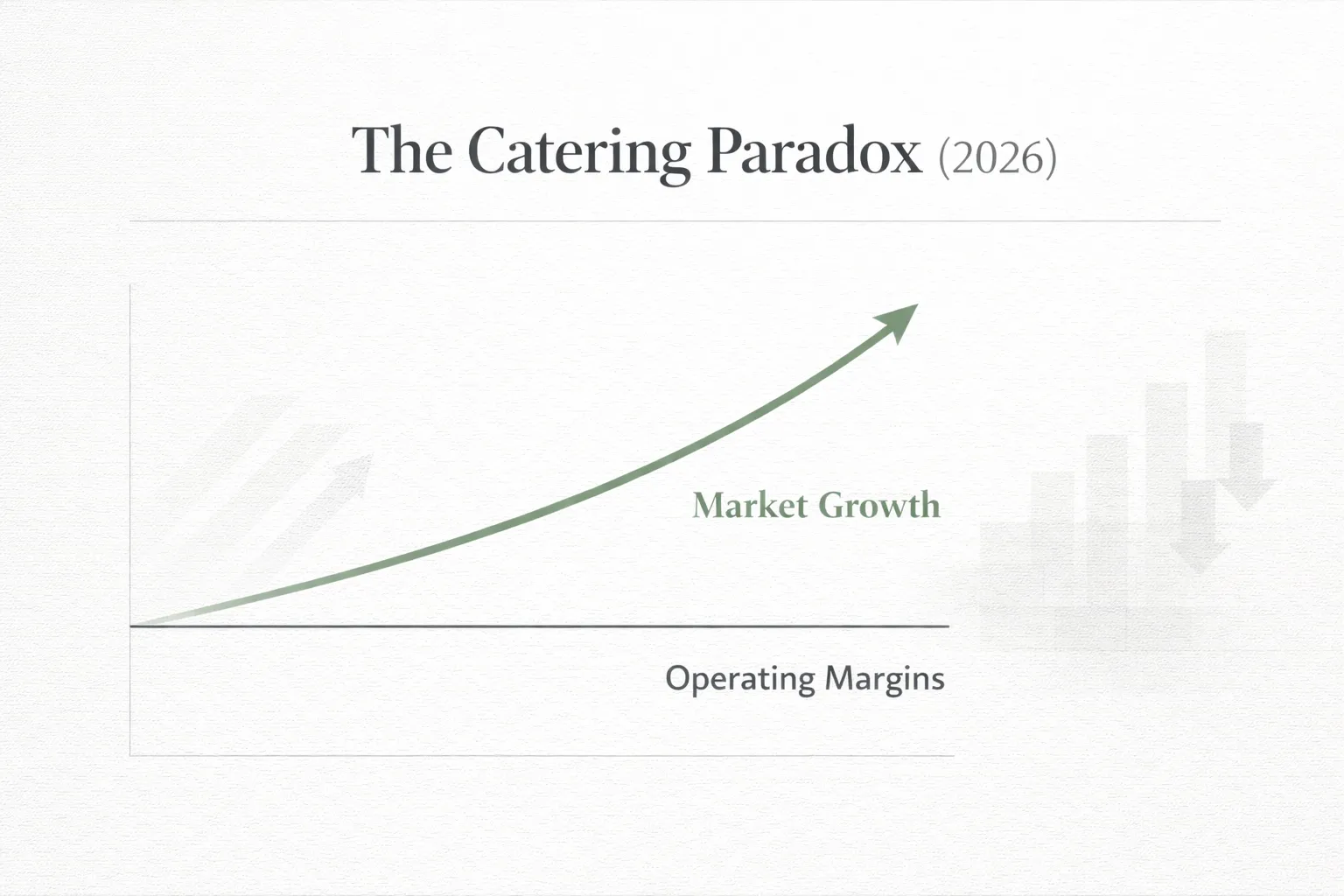
On paper, demand is rising. Industry forecasts put catering growth around a 6.2% CAGR through 2032, reaching north of $124B by 2032. Corporate catering keeps pushing the gas pedal, with a majority of corporate buyers planning to increase spend, and many ordering monthly or weekly.
But growth doesn’t automatically turn into profit. And it definitely doesn’t turn into sleep. (If you’re seeing margin leaks you can’t explain, you’re not alone.)
What’s happening in 2026 is a split. Two businesses can have the same revenue and live in totally different universes.
One has clean handoffs, repeatable delivery, controlled costs, and room to breathe.
The other has “hero mode,” spreadsheet triage, and margins that vanish like steam from a hotel pan.
That gap is widening fast.
The catering paradox in 2026
Here’s the uncomfortable math.
The market expands.
Customer expectations climb.
Labor stays scarce.
Costs stay sticky.
Meanwhile, a huge chunk of operators say scaling sales is hard. In one industry report, 57% said growing catering sales has been a struggle.
That same report shows what’s driving the pressure:
- 98% cite labor costs as a major concern.
- 86% report being understaffed.
- 75% of catering orders happen online.
So the demand channel is digital… but the delivery engine is often manual.
That mismatch is where “busy” turns into “broke.”
The smart operator playbook: 7 operational differentiators that matter in 2026
If you strip away food trend noise, the winners are doing a few boring things aggressively well. Boring like seatbelts. No one posts about them, everyone needs them.
1) Integrated operations and real-time visibility, not tool sprawl
Smart operators have fewer systems, but each one talks to the other. They can answer basic questions without a scavenger hunt:
- What’s closing rate by lead source?
- Which clients reorder?
- What menu items are quietly wrecking food cost?
- Where do labor hours drift week to week?
In 2026, “I’ll figure it out later” is expensive. Especially when cost pressures are still rising. Surveys across foodservice keep pointing to labor and food cost increases as top issues, and operators responding with tighter scheduling, cross-training, and more automation.
What changes this year: reporting becomes operational, not just accounting.
2) Personalization that scales without adding chaos
Clients still want customization, dietary notes, “can we do this but gluten-free and also not sad”… and they want it fast.
What smart operators do differently is they systematize personalization:
- structured client preferences
- menu templates that flex
- auto-populated proposal language
- standardized substitution logic (so the kitchen isn’t improvising at 2 a.m.)
Across industries, personalization consistently correlates with better retention and customer response. You don’t need a futuristic lab. You need clean data capture and repeatable rules.
3) Sustainability moves from “nice story” to RFP requirement
In 2026, sustainability shows up in more bids, more venue rules, and more procurement checklists.
You may not see “80% demand zero waste” written on a contract, but you will see:
- waste diversion questions
- packaging constraints
- donation and compost requirements
- proof of process, not vibes
Event sustainability reporting is becoming more common, with surveys showing increasing signals that sustainability info is being required or indicated as required. And the larger consumer trend is clear: sustainability influences purchasing decisions for a big portion of buyers.
Practical angle: if you can’t track waste, packaging, and donation flows, you can’t credibly sell it.
4) Menu engineering for profit, not just applause
In catering, one percentage point is loud.
Most successful operations target a food cost in a fairly tight band, commonly around 28% to 35% (with some premium models running lower on food cost because pricing power is higher).
Now do the math.
A simple example (not a case study, just arithmetic):
- $1.5M annual catering revenue
- food cost drops from 32% to 29%
- savings: 3% of $1.5M = $45,000
That’s not “optimize later” money. That’s a vehicle, a sous chef, or your winter slow season buffer.
Smart operators engineer margins into menus:
- build “profit anchors” (items that sell well and run low variance)
- reduce ingredient sprawl
- standardize portioning
- set rules for substitutions so they don’t explode cost
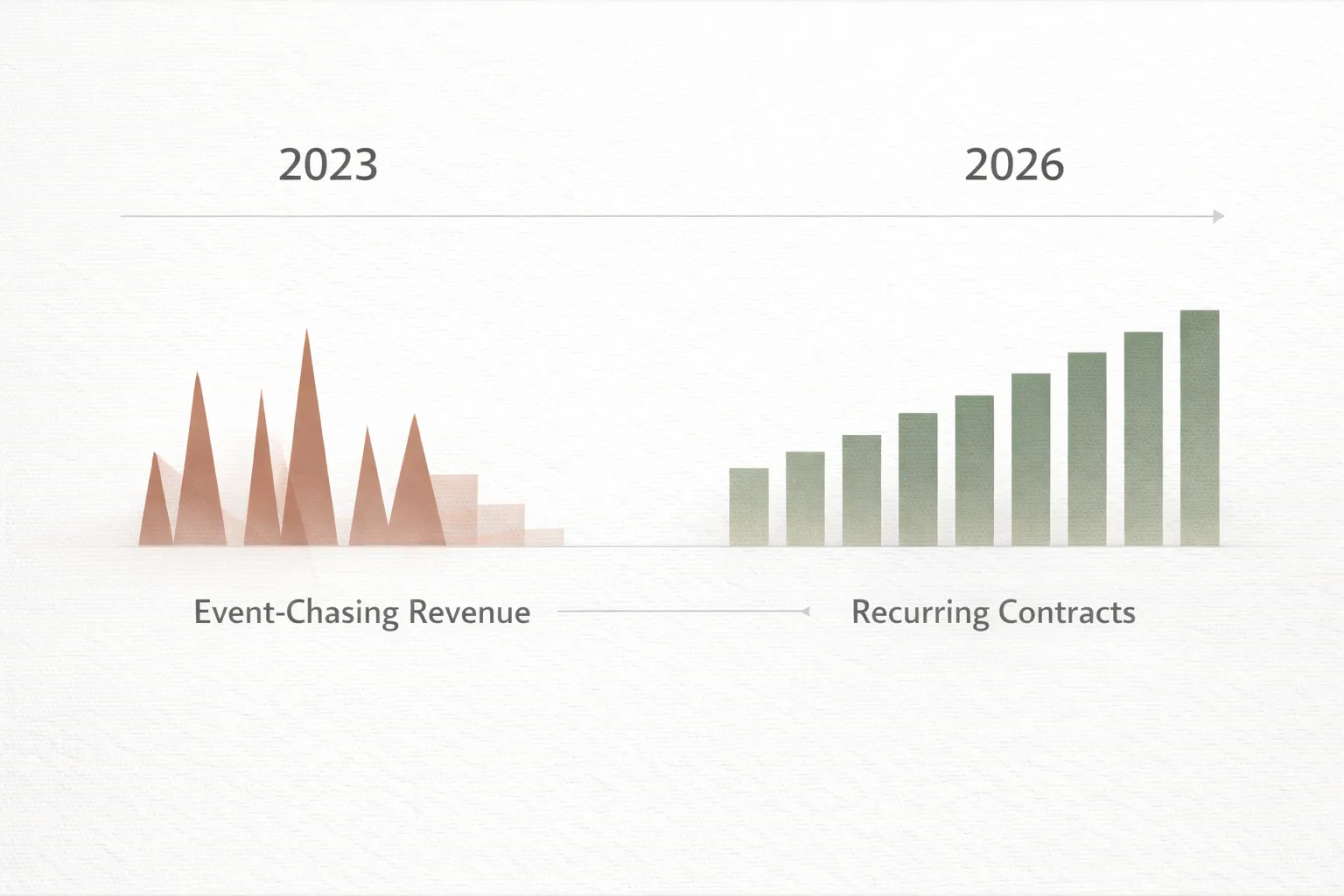
5) Recurring revenue, not event-chasing
This is the biggest shift.
Event catering is volatile. Corporate routines are not. Businesses order repeatedly when you become the default. That’s why corporate buyers ordering monthly and weekly matters.
Smart operators pursue repeatable contracts:
- weekly team lunches
- monthly all-hands catering
- standing executive meetings
- recurring drop-off packages for departments
It’s not glamorous. It’s the closest thing catering has to predictability.
6) Reliability becomes the brand, not the logo
In 2026, reliability is a sales channel.
Most corporate clients care about:
- quality and taste
- order accuracy
- consistency across repeats
Smart operators formalize reliability like a system:
- clear SLAs for confirmations and changes
- delivery checklists
- packaging standards by menu type
- incident logging (so mistakes don’t repeat)
This is the boring stuff that wins the bid the second time.
7) Labor strategy shifts from “hire harder” to “design the work”
If 86% report being understaffed, “we’ll just hire more” is not a strategy.
Smart operators reduce the labor burden per order:
- demand-based staffing (forecasting volume by day and client)
- cross-trained roles
- standardized production plans
- fewer last-minute changes because change control is real
Across restaurant industry surveys, labor costs keep trending up, and operators keep looking for scheduling efficiency and process improvements.
Small gains compound. On a $600K labor spend, a 4% efficiency improvement is $24K. That’s not theory, it’s multiplication.
The technology stack smart operators use in 2026
This is where most blog posts get lazy and list 40 tools. That’s the opposite of what high-margin operators do.
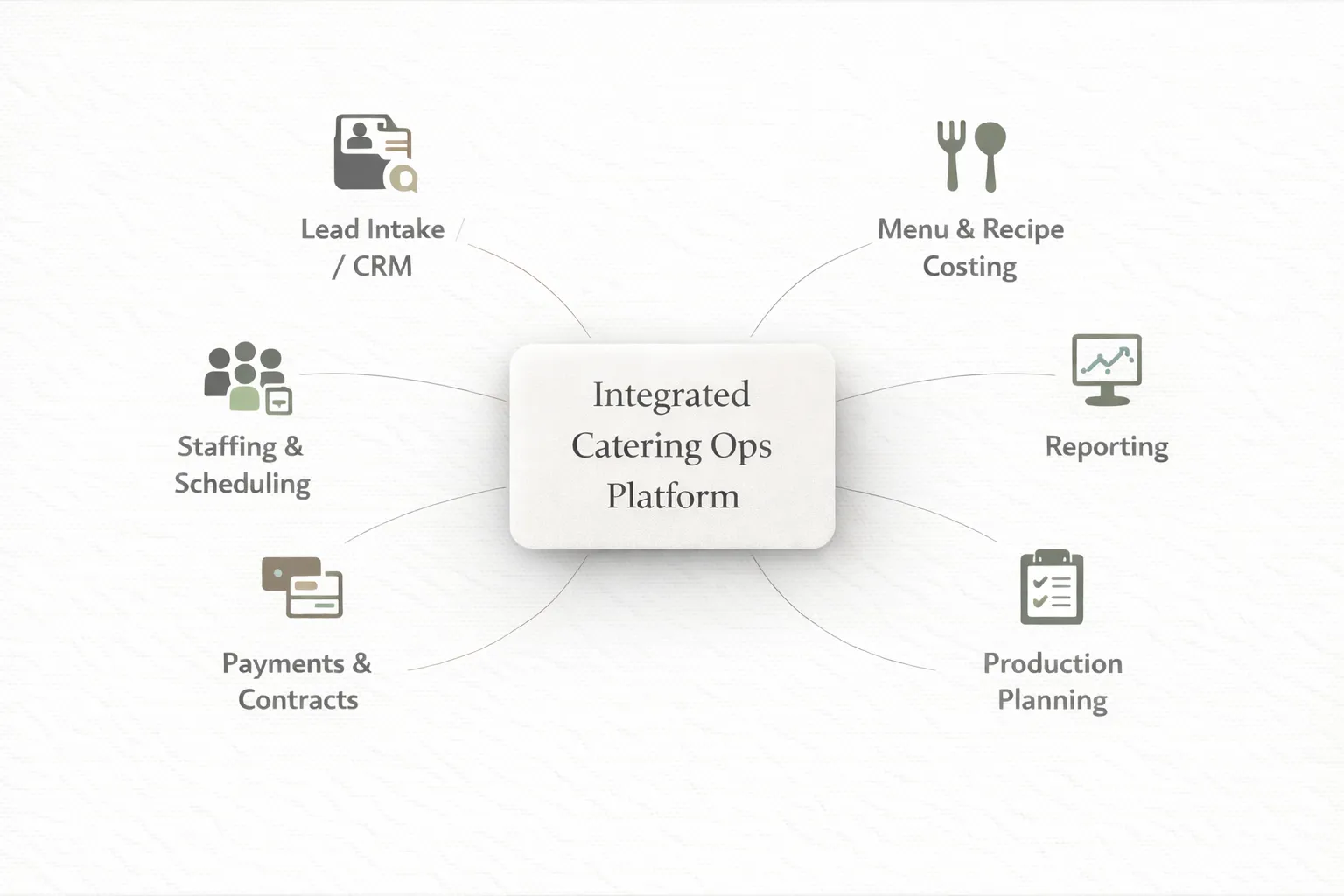
The modern catering stack is about fewer tools with tighter integration.
Here’s the functional view.
1) Lead intake + CRM
Purpose: stop losing inquiries, follow up consistently, build repeat business. A solid CRM for catering is foundational.
CRM impact data varies by study, but the broad finding is consistent: CRM adoption is linked to meaningful revenue lift, with some cited research pointing to increases up to ~41% in certain contexts.
What this means in catering terms:
- capture corporate reorder patterns
- track decision makers
- log preferences and constraints
- build a predictable follow-up cadence
2) Proposal + pricing engine
Purpose: quote fast, price consistently, protect margin. See how proposal software changes the game.
Smart operators:
- tie pricing to real recipe costs
- standardize service fees
- enforce minimums and cutoff times in writing
Need a starting point? Here’s a catering proposal template to work from.
3) Menu + recipe costing
Purpose: reduce food cost variance, control substitutions, simplify purchasing. Production tools make this visible.
This is where “menu engineering” becomes real.
- ingredient-level costing
- portion standards
- margin by item and package
4) Production planning + event execution
Purpose: turn an order into a repeatable plan.
This includes:
- BEOs
- kitchen prep lists
- packing and labeling
- delivery schedules
5) Inventory + waste tracking
Purpose: stop throwing profit away. Profitability tracking starts here.
Food waste reduction has been shown repeatedly to produce strong ROI, with reports showing significant savings per dollar invested in waste reduction initiatives.
Even if you don’t run a formal program, tracking inventory and variance is one of the simplest ways to find hidden cost.
6) Scheduling + labor planning
Purpose: match labor to demand instead of guessing.
The “right” solution depends on size, but the trend is consistent: data-driven scheduling and process automation are common responses to labor cost pressure. Integrations with staffing tools like Nowsta or StaffMate help here.
7) Payments + contracts
Purpose: fewer delays, fewer disputes, cleaner cash flow.
In 2026, clients expect:
- online payments
- e-signatures
- clean policies
The operational bonus is huge: fewer back-and-forth threads, fewer “wait, what was included” moments.
Industry headwinds smart operators plan for, instead of reacting to
This year’s winners are running offense… but they’re also building guardrails.
Inflation and commodity volatility
Operators are still seeing food cost increases, and many expect continued pressure.
Your response can’t be “raise prices randomly.” It has to be:
- dynamic cost updates
- menu design that reduces high-volatility ingredients
- vendor negotiation and alternates
Labor cost pressure
88% of surveyed operators in one restaurant industry survey reported increased labor costs, with many expecting more increases.
Your response is:
- reduce touchpoints per order
- simplify execution
- schedule based on demand
Rising expectations, fueled by digital ordering
If 75% of catering orders happen online, clients expect speed and clarity.
Slow confirmations, manual invoices, or “we’ll email you back” is a conversion leak.
Sustainability as compliance, not marketing
Cities, venues, and corporate ESG goals keep tightening.
Even when requirements are soft today, the direction is stiff.
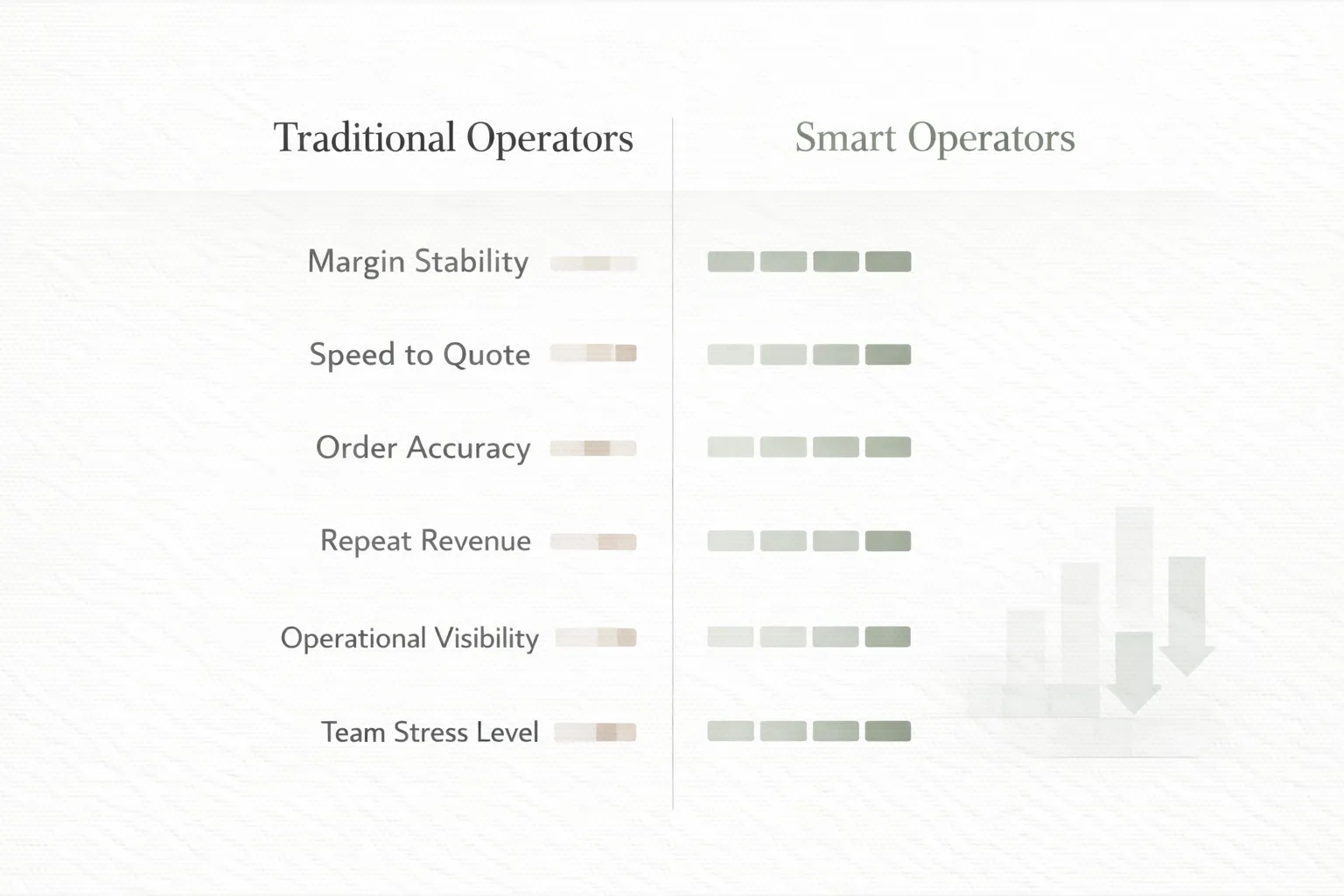
The competitive gap is widening, and it’s measurable
You can see the split in three places.
1) Margin structure
High-performing catering models can reach net margins in the 10% to 15% range, with overall averages often lower.
The difference is rarely “better recipes.” It’s operational control.
2) Speed to quote and close
Faster proposals win. Faster payment capture wins. Faster confirmations win.
When competitors are still retyping menus into PDFs, speed becomes a weapon. (Stonehouse Catering cut proposal time by 80% after switching systems.)
3) Repeat business
Recurring revenue is the moat. Monthly and weekly corporate ordering patterns reward whoever is easiest and most consistent.
What “smart” actually means in 2026: 7 non-negotiables
These are the practices that show up again and again in profitable operations.
-
One source of truth for orders - No duplicate entry. No “which spreadsheet is current.”
-
Pricing tied to real costs - Recipes and ingredient costs flow into proposals, not gut feel.
-
Change control is real - Every change is logged, priced, and communicated.
-
Standardized production and packing - If it lives in someone’s head, it will break at scale.
-
Demand-based staffing - Schedule to forecast, then refine weekly.
-
Client history is captured - Preferences, pain points, reorder rhythms.
-
Reporting is operational - Dashboards that tell you what to fix this week, not what happened last quarter.
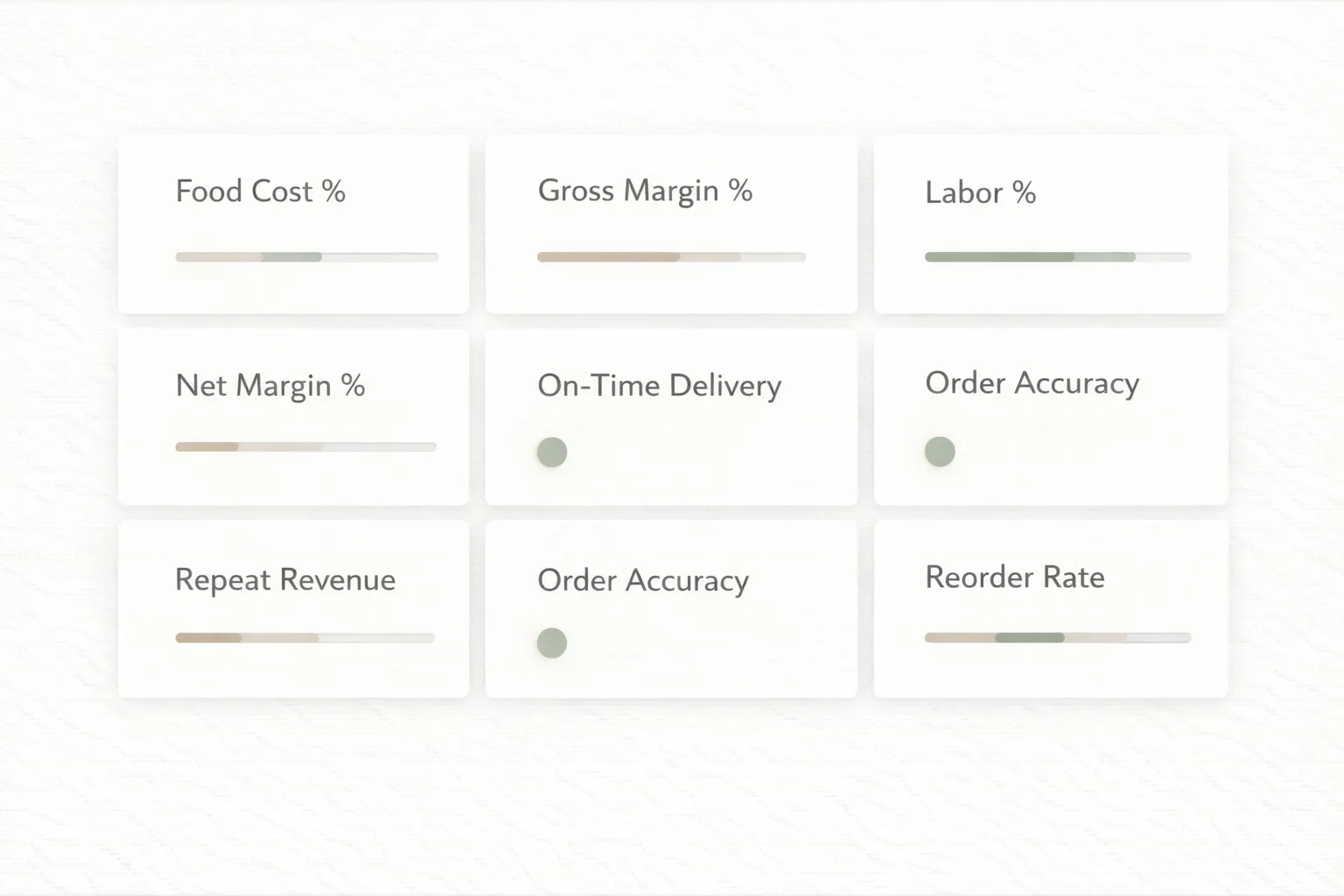
A practical 2026 checklist: audit yourself in 10 minutes
These questions are blunt on purpose.
Sales and marketing
- Do you know your close rate by lead source?
- Do you have a consistent follow-up sequence for corporate leads?
- Can you pull a list of “clients who ordered twice” and target them for recurring contracts?
Pricing and margin
- Can you see food cost by menu item or package?
- Do you have “profit anchors” built into every proposal?
- Do you track variance, or just monthly totals?
Operations and reliability
- Is every event executed from a standardized plan?
- Do you have a packing checklist and delivery checklist?
- Can you measure order accuracy, not just complaints?
Labor and scheduling
- Are you scheduling based on demand forecasts, or memory?
- Can you quantify hours per event type and find outliers?
- Are roles cross-trained enough to absorb absences?
Sustainability and compliance
- Can you answer “what happens to leftovers” without improvising?
- Do you track packaging choices per event type?
- Can you provide a basic sustainability summary when asked?
If half of these feel fuzzy, you’re not alone. It just means the ceiling is higher than you think.
Where Curate fits, and why it matters
Most operators don’t need “more software.” They need fewer gaps.
The core problem in catering ops is fragmentation:
- inquiry forms in one place
- proposals in another
- recipes in a file
- staffing in texts
- payments in separate links
- reporting somewhere else, maybe
That’s how mistakes happen. And mistakes in catering are expensive, public, and hard to undo.
Integrated platforms exist because the work is interconnected. You don’t quote a menu without costing it. You don’t staff an event without knowing volume and timeline. You don’t promise delivery windows without operational visibility. That’s the idea behind catering management software built for operations, not just order-taking.
If you want a simple next step, use this as your filter:
If a tool doesn’t reduce duplicate entry, reduce handoffs, or reduce errors, it’s not helping.
(And yes, if you want to compare approaches, Curate’s 2025 catering report is a solid baseline for the market stats and the direction of travel.)
FAQ: 2026 catering trends operators are searching right now
What are the biggest catering trends in 2026?
Operational trends are dominating: integrated tech, recurring corporate revenue, menu engineering for margin, and reliability systems that reduce errors. Market growth and corporate demand are up, but labor and cost pressure force operators to run tighter.
Is corporate catering still growing?
Yes. Multiple industry sources cite corporate buyers increasing budgets and ordering on recurring cycles monthly or weekly.
What food cost percentage is healthy for catering?
Many successful operators target roughly 28% to 35% food cost, with variation by market and positioning.
Why do some caterers scale easily while others stall?
The difference is usually systems: one source of truth, cost-based pricing, standardized execution, and demand-based staffing. When 75% of orders are online and most operators report labor pressure, manual workflows break faster. Here’s a deeper look at how integrated software saves time.